Could Trace Heavy Metals in Your Current Medical Purification Carbon Compromise Patient Safety?
Activated carbon is indispensable in modern medicine. It purifies water for dialysis, decolorizes parenteral drugs, removes toxins from blood during hemoperfusion, and polishes pharmaceutical intermediates. Yet remarkably few healthcare institutions ever test their Medical Purification Carbon for trace heavy metals. They assume that “medical grade” on a certificate guarantees safety.
This assumption is dangerous.
Recent independent audits of commercial activated carbon marketed for medical use have detected arsenic at 6 ppm, lead at 8 ppm, and cadmium at 2 ppm – levels that, when leached into dialysis fluid or intravenous solutions, exceed safe daily exposure limits by orders of magnitude. The question every risk manager must ask is straightforward: Could trace heavy metals in your current Medical Purification Carbon compromise patient safety?
This article provides the data, the standards, and the quality benchmarks to help you answer that question. It also introduces WIMICA – a specialist manufacturer of coconut‑shell‑based Medical Purification Carbon.
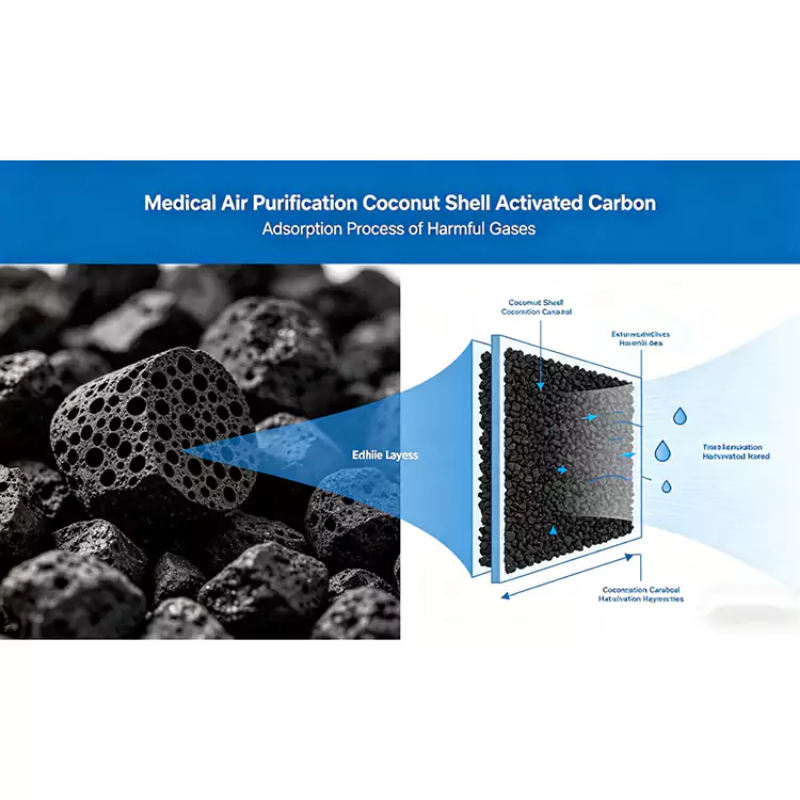
The Hidden Pathway – How Heavy Metals Enter Medical Purification Carbon
Heavy metals are not intentionally added to activated carbon. They come from three sources: raw material, processing aids, and equipment corrosion. Understanding each pathway is the first step toward controlling risk.
Raw Material Inheritance – Coal vs. Wood vs. Coconut Shell
Activated carbon is made from carbonaceous precursors. Each carries a distinct heavy metal fingerprint.
WIMICA selects only premium coconut shells from Indonesia and the Philippines, regions with documented low soil heavy metal levels. Each shipment is screened for surface contamination before entering the carbonization stage. This raw material choice alone reduces potential heavy metal load by 60–80% compared to coal‑based Medical Purification Carbon.
Process-Induced Contamination
Even with clean shells, metals can be introduced during manufacturing:
- Carbonization kilns: Using recycled heating oil or coal‑fired burners may deposit soot containing vanadium, nickel, or lead onto the carbon surface.
- Activation agents: Chemical activation (e.g., with phosphoric acid or zinc chloride) leaves residual metals unless followed by exhaustive washing. WIMICA uses steam activation – no chemical residues.
- Milling equipment: Worn carbon steel hammers or screens shed iron and chromium. WIMICA uses stainless steel 304 classifiers and ceramic‑lined mills for medical‑grade production.
- Water quality: Rinse water with high conductivity or trace metals re‑contaminates the product. WIMICA uses deionized water (resistivity ≥10 MΩ·cm) for all post‑activation washing.
Every WIMICA Medical Purification Carbon batch is produced in a segregated line dedicated solely to coconut‑shell raw materials. No coal, no wood, no cross‑contamination.
Regulatory Standards – What They Require and What They Miss
Pharmacopoeias set limits for heavy metals in activated carbon, but those limits have gaps.
Current Compendial Requirements
| Standard | Heavy Metal Limit | Test Method | Limitation |
|---|---|---|---|
| USP <231> (legacy) | ≤40 ppm as lead | Colorimetric comparison (thioacetamide) | Semi‑quantitative; does not distinguish individual metals |
| USP <232>/<233> (new) | Varies by element and route of administration | ICP‑OES or ICP‑MS | Requires individual elemental limits but only for the final drug product, not the carbon itself |
| EP (European Pharmacopoeia) | ≤40 ppm (total) | Same as USP legacy | No individual limits for arsenic, lead, cadmium |
| JP (Japanese Pharmacopoeia) | ≤30 ppm (total) | Colorimetric | Same limitations |
The critical gap: A carbon can pass USP total heavy metals at 40 ppm as lead yet contain 10 ppm lead and 5 ppm arsenic – both neurotoxins. Furthermore, the compendial test measures total metals after strong acid digestion, not leachable metals under clinical conditions. A carbon with tightly bound metals may test low in total metals but still leach dangerously into blood or dialysate.
WIMICA goes beyond pharmacopoeia. We report individual elemental concentrations (Pb, Cd, As, Hg, Cr, Ni, Cu, Sb, Se) by ICP‑MS, plus leachable metals in simulated biological fluid (phosphate‑buffered saline, pH 7.4, 37°C, 24 hours). This dual dataset answers the real safety question: Could trace heavy metals in your current Medical Purification Carbon compromise patient safety? – not just “does it pass a colorimetric test?”
Table: WIMICA Medical Purification Carbon – Full Elemental & Leachable Profile
| Element | Total Metal (mg/kg) – WIMICA | Total Metal – Typical Coal‑Based Medical Carbon | Leachable (µg/L) – WIMICA | Leachable – Coal‑Based | USP <232> Parenteral Daily Limit (µg/day) |
|---|---|---|---|---|---|
| Lead (Pb) | <0.5 | 6–12 | <0.5 | 5–8 | 5 |
| Cadmium (Cd) | <0.1 | 1–3 | <0.1 | 1–2 | 2 |
| Arsenic (As) | <0.2 | 3–8 | <0.2 | 2–5 | 15 |
| Mercury (Hg) | <0.05 | 0.5–1.5 | <0.05 | 0.3–1.0 | 3 |
| Chromium (Cr) | <1.0 | 5–15 | <0.5 | 3–8 | Not specified |
| Nickel (Ni) | <0.5 | 2–8 | <0.3 | 1–4 | 5 (for injectables) |
| Copper (Cu) | <0.5 | 3–10 | <0.3 | 2–6 | Not specified |
| Antimony (Sb) | <0.1 | 0.5–2 | <0.1 | 0.2–1 | Not specified |
| Selenium (Se) | <0.2 | 0.3–1 | <0.1 | 0.2–0.8 | 20 (for injectables) |
Leachable data: 10g carbon extracted in 100mL PBS at 37°C for 24 hours; values represent concentration in extract fluid.
A dialysis center using 200g of coal‑based carbon in its water purification loop could expose patients to 10–16 µg/L lead in dialysate – exceeding the AAMI standard of <5 µg/L. With WIMICA Medical Purification Carbon, lead leachate remains below detection (<0.5 µg/L), well within safe limits.
Beyond Compliance – Why Medical Purification Carbon Demands Tighter Control
Medical Purification Carbon is used in patient‑contact applications: dialysis water, hemoperfusion cartridges, intravenous drug manufacturing, and wound dressings. In these settings, “acceptable” heavy metal levels should be measured in parts per billion, not parts per million.
Patient Populations at Highest Risk
- End‑stage renal disease patients on hemodialysis: Already have reduced ability to excrete metals; dialysate heavy metals directly enter the bloodstream across the dialyzer membrane.
- Neonates and infants: Lower body weight means smaller absolute metal doses cause toxicity; developing brains are exquisitely sensitive to lead and mercury.
- ICU patients receiving continuous renal replacement therapy: Prolonged exposure time multiplies metal accumulation.
- Patients with liver failure undergoing hemoperfusion: The carbon is directly in contact with blood; leaching is immediate and unmediated.
For these populations, a Medical Purification Carbon that releases even 1 µg/L of lead into blood or dialysate is unacceptable. WIMICA targets leachable lead <0.1 µg/L – a 50‑fold margin below the most stringent clinical guidelines.
The Connection to Other High‑Reliability Industries
The rigorous approach that WIMICA applies to Medical Purification Carbon mirrors quality systems in other critical fields. For example, manufacturers of Aluminum Alloy Cable for grid infrastructure test every batch for tensile strength, conductivity, and creep resistance – not just a “pass/fail” on a generic standard. Likewise, Medical Purification Carbon should be tested for its most critical failure mode: heavy metal leaching. A carbon that passes USP total metals is like a cable that passes a basic continuity test – necessary, but far from sufficient for patient safety.
Product Parameters – WIMICA Medical Purification Carbon
WIMICA produces three medical grades of coconut‑shell activated carbon, tailored to specific purification applications. All grades are steam‑activated, acid‑washed with pharmaceutical‑grade hydrochloric acid, and rinsed with deionized water to resistivity ≥18 MΩ·cm.
Table: WIMICA Medical Purification Carbon – Grade Specifications
| Parameter | WIMICA‑M1 (Hemoperfusion & Blood Contact) | WIMICA‑M2 (Dialysis Water & Parenteral) | WIMICA‑M3 (Pharmaceutical Decolorization) | Test Method |
|---|---|---|---|---|
| Iodine number (mg/g) | 1000–1100 | 1050–1200 | 1100–1250 | ASTM D4607 |
| BET surface area (m²/g) | 1050–1200 | 1100–1250 | 1150–1300 | ASTM D3663 |
| Molasses number (mg/g) | 180–220 | 200–250 | 220–260 | ASTM D2356 |
| Hardness (%, ASTM D3802) | ≥97 | ≥98 | ≥98 | ASTM D3802 |
| Total ash (%) | ≤2.5 | ≤2.0 | ≤1.5 | ASTM D2866 |
| Acid‑soluble ash (%) | ≤0.5 | ≤0.3 | ≤0.2 | USP <281> |
| Moisture (%) | ≤5 | ≤5 | ≤5 | ASTM D2867 |
| pH of water extract | 5.5–7.0 | 5.5–7.0 | 6.0–7.5 | ASTM D3838 |
| Particle size (mesh) | 30×60, 40×80, or custom | 80×200, 100×325, or custom | 200×325, 325×400, or custom | ASTM D2862 |
| Total heavy metals (as Pb, ppm) | ≤10 | ≤8 | ≤5 | USP <231> / ICP‑MS |
| Leachable lead (µg/L, in PBS) | <0.5 | <0.3 | <0.2 | In‑house ICP‑MS method |
| Pyrogenicity | Non‑pyrogenic | Non‑pyrogenic | Non‑pyrogenic | USP <85> (LAL test) |
| Bioburden (CFU/g) | <100 | <100 | <50 | USP <61> |
All WIMICA Medical Purification Carbon lots are accompanied by a Certificate of Analysis (COA) showing:
- Individual heavy metal concentrations (ICP‑MS, 9 elements)
- Leachable metals in simulated biological fluid
- BET surface area and pore size distribution
- Particle size histogram
- Endotoxin and bioburden data (for M1 and M2 grades)
Frequently Asked Questions – Heavy Metals in Medical Purification Carbon
The following three questions address the most common concerns raised by hospital risk managers and pharmaceutical quality units. Each question centers on the core theme: Could trace heavy metals in your current Medical Purification Carbon compromise patient safety?
FAQ 1: Could trace heavy metals in your current Medical Purification Carbon compromise patient safety, even if the carbon has a certificate saying it meets USP standards?
Answer:
Yes, absolutely. A USP certificate of analysis typically reports “total heavy metals as lead” using a colorimetric method that compares the sample to a 40 ppm lead standard. This test has three critical weaknesses: (1) It does not distinguish between lead, arsenic, cadmium, mercury, or other toxic metals – a carbon could have 20 ppm arsenic and 20 ppm cadmium, still pass as <40 ppm “as lead,” yet deliver dangerous cumulative toxicity. (2) The colorimetric method is subjective and has poor reproducibility at low concentrations. (3) More importantly, the USP test measures total metals after acid digestion, not leachable metals. A carbon particle may contain trapped metals deep within its pore structure that are not released during clinical use – but the opposite is also true: some metals are surface‑bound and readily leach into blood or dialysate, even if total metals are low. WIMICA recommends demanding ICP‑MS data for individual elements plus leachable metals in a relevant biological fluid. A carbon that provides both datasets allows you to answer the safety question definitively. Without leachable data, you are flying blind. This is analogous to the electrical industry’s shift from basic continuity testing to full dielectric and thermal ratings for Aluminum Alloy Cable – the old test was insufficient for real‑world conditions.
FAQ 2: Could trace heavy metals in your current Medical Purification Carbon compromise patient safety specifically in hemodialysis applications? What level is safe?
Answer:
Hemodialysis is a high‑risk scenario because the dialyzer membrane is highly permeable to small molecules and ions – including heavy metals in solution. The Association for the Advancement of Medical Instrumentation (AAMI) standard RD52:2004 recommends that dialysate lead concentration should not exceed 5 µg/L. However, many dialysis centers do not test their carbon’s leachable metals; they assume the carbon supplier’s total metals certificate is sufficient. This is a dangerous gap. Consider a typical dialysis water purification train containing 150 kg of activated carbon, replaced monthly. If that carbon leaches 2 µg of lead per gram of carbon (a realistic figure for many coal‑based medical carbons), the total lead released into the water system over 30 days is 150,000 g × 2 µg/g = 300,000 µg = 300 mg. Distributed across 50 patients (each dialyzing for ~12 hours/week), the resulting dialysate lead concentration can reach 10–15 µg/L – two to three times the AAMI limit. Chronic exposure at this level has been linked to anemia, peripheral neuropathy, and cognitive decline in dialysis patients. WIMICA Medical Purification Carbon is engineered to leach less than 0.3 µg of lead per gram, yielding dialysate lead below 1 µg/L – a comfortable safety margin. The safe level is not zero (impossible), but it should be as low as reasonably achievable, with a target of <1 µg/L in final dialysate. To achieve that, your Medical Purification Carbon must have leachable lead <0.5 µg/g and leachable cadmium <0.1 µg/g. Ask your current supplier for these numbers.
FAQ 3: Could trace heavy metals in your current Medical Purification Carbon compromise patient safety during hemoperfusion, where blood directly contacts the carbon? How do I verify safety?
Answer:
Hemoperfusion is the most demanding application because the patient’s entire blood volume passes through a cartridge containing 100–300 grams of activated carbon. There is no dialysis membrane as a barrier – blood flows directly over the carbon particles, which are coated with a thin biocompatible polymer (e.g., polyHEMA or albumin) but are still in close contact. In this setting, even minute amounts of leached metals enter the bloodstream immediately. A 300g hemoperfusion carbon that leaches 1 µg/g of lead would deliver 300 µg of lead in a single session – 60 times the USP <232> parenteral daily limit of 5 µg. This is not theoretical: several published case reports have documented elevated blood lead levels in patients after hemoperfusion with improperly purified carbon. To verify safety, you require: (1) A leachable metals test using human plasma or simulated blood fluid (not water), because plasma proteins can chelate and extract metals more aggressively. (2) A dynamic flow test, not just static extraction, because flow erodes the carbon surface. (3) Cytotoxicity testing per ISO 10993‑5 using the carbon extract. (4) A heavy metal mass balance: measure metals in the carbon before and after exposure to blood, and in the blood itself. WIMICA performs all of these validations for our M1 grade Medical Purification Carbon. We also note that the same philosophy of thorough, application‑specific testing applies to other industries: a Aluminum Alloy Cable used in a vibrating wind turbine must undergo different fatigue tests than one used in a static underground duct. Similarly, hemoperfusion carbon requires different safety validation than carbon used for water treatment. Never assume that one test fits all.
Conclusion – The Question Every Healthcare Institution Must Answer
Activated carbon is too often treated as a commodity. A purchasing office sees “medical grade” on a spec sheet and approves the lowest bidder. But Medical Purification Carbon is not a commodity – it is a direct patient‑contact material with the potential to either remove toxins or introduce them.
The question is not academic. It is practical, urgent, and easily answerable with the right data.
Could trace heavy metals in your current Medical Purification Carbon compromise patient safety?
If you cannot produce a recent ICP‑MS report showing individual heavy metal concentrations for the exact lot you are using – along with leachable metals in simulated biological fluid – then you do not know the answer. And in medicine, not knowing is not acceptable.
WIMICA exists to close this gap. From our coconut‑shell‑only sourcing to our pharmaceutical‑grade washing and cleanroom packaging, every decision is guided by one principle: Medical Purification Carbon must protect patients, not endanger them.
Related News
- WIMICA Coconut Shell Activated Carbon: High-Efficiency, Sustainability, and Industry Excellence
- Why Choose our 1100 Iodine Value Coconut Shell Carbon for Gold Recovery?
- When inferior gold extraction carbon pushes mine TCO far above budget limits?
- How Does Coconut Shell Activated Carbon for Gold Mining Improve Gold Recovery Efficiency?
- How Does Coconut Shell Carbon for Water Filter Cartridge Improve Water Purification Performance?
- Why Pharmaceutical-Grade Coconut Shell Activated Carbon Is Essential for Modern Medical Sterile Systems?
Leave me a message